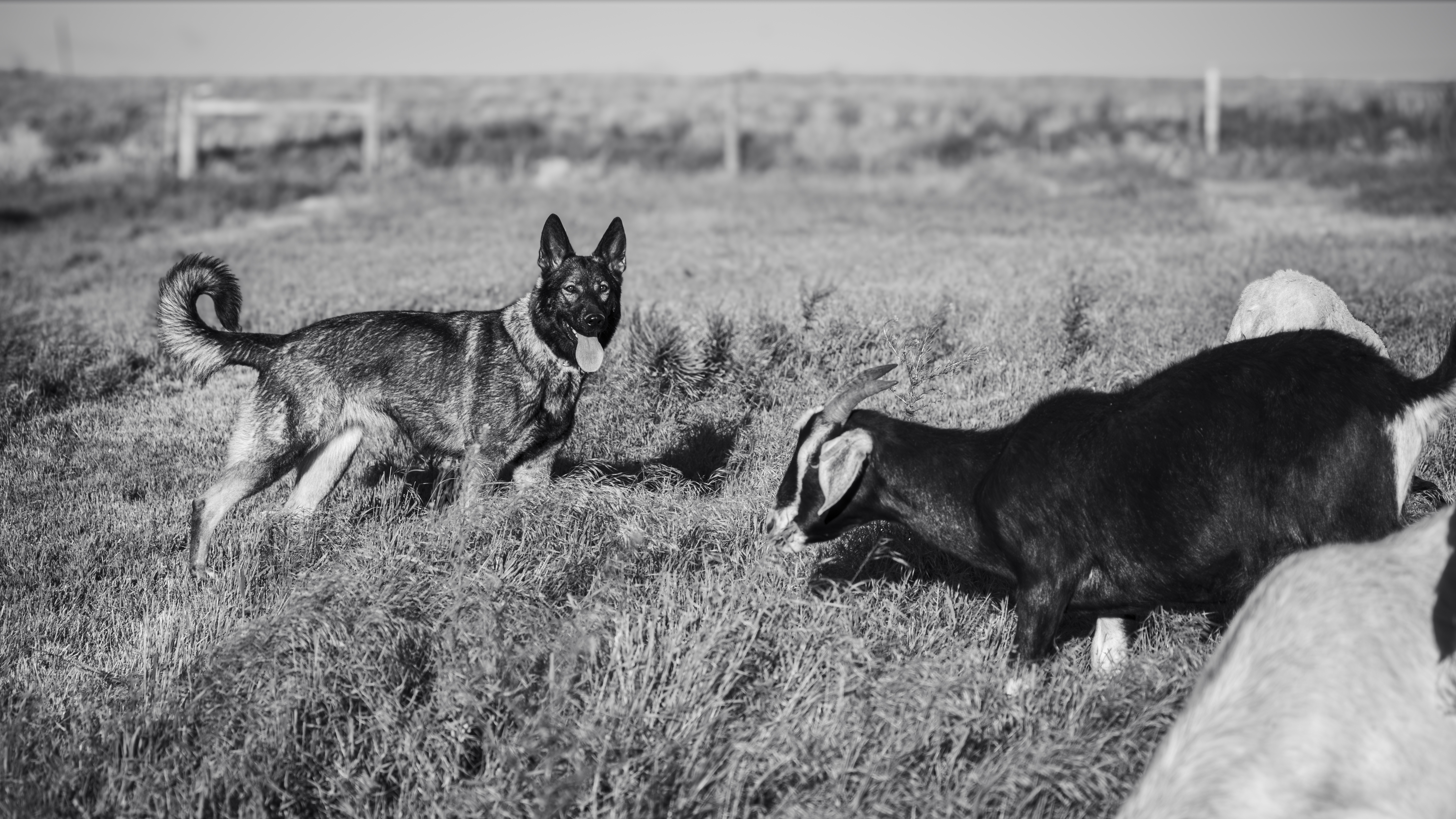
My breeding philosophy is built from the foundational principles laid out in The German Shepherd in Word and Picture by the breed’s founder, Max von Stephanitz. Max defined the German Shepherd is by its soul- a dog who possesses clarity of mind, steady nerve, and the instinct to work in harmony with its handler. It must be confident, resilient, and driven, yet stable and biddable. These qualities are essential to the heart of the breed. Without them, the German Shepherd loses not just ability and purpose, but its identity. Preserving these traits is at the core of my program. My goal is to continuously learn from history, experience, and the dogs themselves to better understand the qualities that make a true German Shepherd, not only to preserve the breed but to strengthen it with every generation so that my dogs reflect the working spirit and excellence this breed deserves. Every breeding decision prioritizes the traits that make a German Shepherd capable of performing its intended roles.
This page explores the essential qualities that define correct temperament, how they align with the breed’s original purpose, and why preserving them is critical.
Above All, a Working Breed
The German Shepherd was created with a singular purpose: to be a working dog of exceptional intelligence, stability, and versatility. Its original breeding aimed to produce an animal capable of herding, guarding, and executing complex tasks under pressure. The breed was designed to be more than just physically strong; it was meant to possess a balanced temperament, resilience, and an eagerness to work. These qualities define the German Shepherd, and breeding decisions must reflect this foundational intent.
Preserving working ability is the cornerstone of responsible breeding, as without it, the German Shepherd becomes a mere imitation of it’s original form. As the book states, “The breeding of shepherd dogs is the breeding of working dogs; and this must always be the aim, or we shall cease to produce shepherd dogs.” The moment selection shifts toward superficial traits like coat color, exaggerated angulation, or size without consideration for temperament and function, the breed begins to deteriorate. Aesthetics alone do not make a German Shepherd. A dog with a beautiful stance but weak nerves or poor drive is a failure of breeding. True breeders must prioritize temperament, working aptitude, and structural integrity that supports functional movement. The breed’s worth is not measured in how it looks but in what it can do.
The founder of there German Shepherd, Max von Stephanitz, sought to refine a dog that was not just strong but mentally capable, stable, and adaptable to various tasks. His philosophy was clear: “Utility is the true criterion of beauty.” This statement is our guiding principle; form must always follow function. Early German Shepherds were bred primarily for their herding instincts, ability to endure long hours of work, and mental sharpness in responding to commands. Over time, their capabilities expanded into police, military, and service work. However, the essence of the breed remains in its working ability. A German Shepherd that is incapable of purposeful work- whether herding, protection, search and rescue, or high-level obedience- is a departure from the breed’s intent.
Modern breeding faces challenges that were not present in the early 1900s and the role of the German Shepherd has evolved. While some still serve in traditional herding and police work, many are now found in sport, search and rescue, service work, and companionship. The danger lies in allowing these shifts in role to excuse the dilution of critical traits. A German Shepherd, regardless of its function, must still embody the strength of nerve, confidence, and mental stability that defined its creation. Today’s breeders must acknowledge these changes without compromising the core essence of the breed and breeding decisions must always be made with the breed’s original function in mind. A breeder who selects for aesthetic appeal over utility risks contributing to the degradation of the breed. The shepherd dog should be judged first and foremost on its mental resilience, adaptability, and ability to work, not on superficial qualities such as coat length, color, or exaggerated physical traits. The goal is not to create a dog that merely looks like a German Shepherd but one that embodies its true nature.
What we look for in our breeding dogs, based on the founding principles set forth by Max Von Stephanitz
- Liveliness: Dogs who show enthusiasm and intensity in their work and are alert, intense, and bursting with purpose.
Liveliness is just as much about mental attitude as physical energy. It means the dog is engaged with its surroundings with a sharp and alert presence. We see this manifest through attentiveness, responsiveness and enthusiasm. A well-bred shepherd has the fire to work but also the ability to channel it productively. Dogs that are lethargic and disinterested fail the breed’s fundamental purpose. They lack the essential spark that makes the breed capable of its work. Without engagement, it cannot respond quickly to commands, adapt to tasks, or meet the demands of real-world work. Energy fuels everything the breed was designed to do, from herding to protection to service work. Without it, the German Shepherd becomes dull and ineffective. - Courage and Self-Confidence: firm, daring, and fearless.
German Shepherds should possess the confidence to stand their ground in the face of adversity. True courage is not reckless aggression but a clear, steady presence that allows the dog to assess situations and act decisively. They do not startle easily, avoid hesitation, and meet challenges head-on. A well-bred shepherd should hold a steady gaze, never flinching or turning away in fear, nor does it lash out recklessly and without reason. A weak or hesitant shepherd is unreliable, while an overly aggressive one is just as faulty. The book warns against “disorderly swashbucklers” that bite without thought, just as it rejects those that crumble under pressure. The best shepherds have the nerve to face pressure without losing control and are dependable in any situation. - Devotion to Duty: A German Shepherd must have an unshakable devotion to duty.
Devotion to duty is not obedience but an innate desire to perform tasks with purpose and commitment. This dedication is seen in a dog that is persistent, reliable, resilient, and willing to work through discomfort and fatigue. The book emphasizes that a true shepherd endures harsh conditions without hesitation, whether in extreme weather or long hours of labor. This is not a breed meant for idle companionship. A well-bred shepherd seeks out work and thrives on it, and if not given work, will create its own- often in destructive ways. A dog that lacks this instinct is unfit for the breed’s purpose. Laziness, disinterest, and inconsistency are serious faults. We must also be careful to avoid overly rigid and mechanical training that stifles natural ability. A well-bred shepherd does not just perform tasks. It takes ownership of them. Without this trait, the breed loses its utility and its identity. - Independence and Intelligence; the ability to assess situations, adapts to challenges, and executes tasks with initiative.
A German Shepherd must be able to independently problem-solve and make decisions. They should not need constant direction but will be able to anticipate the right move and take action accordingly. A herding dog must read the movement of livestock and adjust its approach without waiting for a command. A protection dog must determine whether a threat is real and respond with the appropriate level of force. A search-and-rescue dog must navigate obstacles, locate a missing person, and alert their handler without needing step-by-step instructions. These dogs balance independence with loyalty and work in partnership with their handler. Dogs trained by force, without room for self-expression, lose their ability to work effectively. A rigid, mindless dog that only follows commands without thought is just as faulty as one that is uncontrollable. - Protective and Loyal
A well-bred German Shepherd is naturally watchful and protective, but this instinct is based on judgment, not blind aggression. A proper shepherd does not react impulsively but evaluates threats and responds with control. True protectiveness extends beyond self-preservation. The book states, “Defense, which is a consequence [of watchfulness], so far as it results in protecting others, is the beginning of love for one’s neighbor“. A well-bred German Shepherd protects because it feels a duty to those it considers its own, much like a mother defends her young. Loyalty is more than obedience. The book describes the shepherd’s devotion as unmatched, stating, “There are few among us who can surpass [the dog] in fidelity and unconditional readiness to sacrifice himself“. A proper shepherd does not just follow commands but is willing to risk itself for its handler, their family, and even strangers. A dog that lacks protectiveness is unfit for the breed. The book warns that “every good shepherd dog is born watchful”, and those that fail to develop proper guarding instincts lack a fundamental quality. However, fear-based aggression is just as faulty. A German Shepherd should warn before engaging, act with confidence, and never lash out without cause.
 Wyohaus German Shepherds